Modern education is changing — and at the center of that change is the smart display (or “smartboard” / “interactive display”). When paired with an all-in-one education display system, this technology doesn’t just replace a whiteboard or projector — it transforms how people learn, collaborate and engage.
Interactive, multimedia-rich learning and presentation
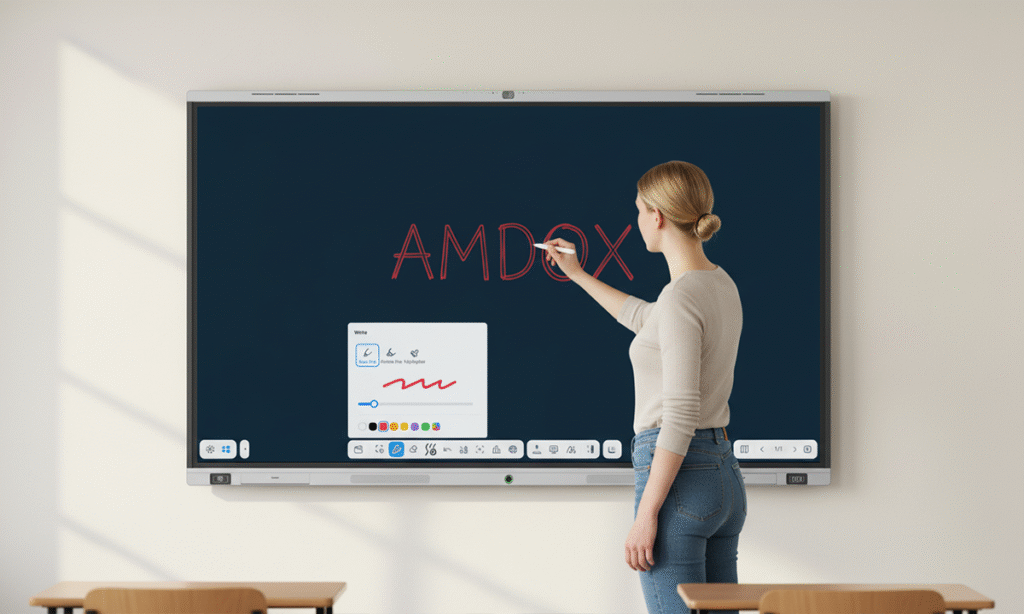
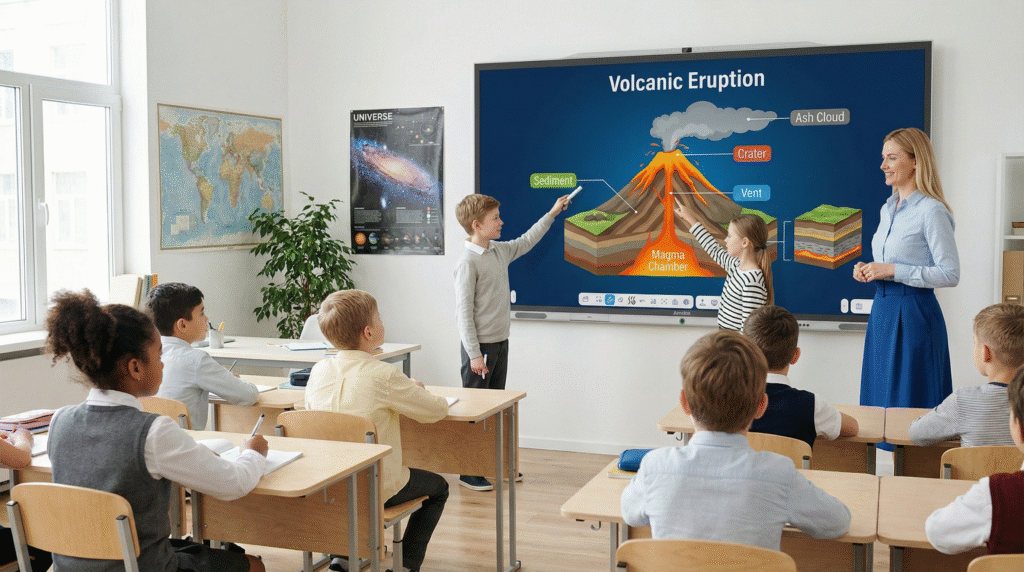
Smart displays allow educators to integrate multimedia — videos, images, animations, simulations — directly into lessons. Complex concepts become easier to grasp when visual, auditory, and interactive elements combine. This multimodal presentation style helps reach learners with different preferences — visual, auditory, or kinesthetic. Rather than relying on static slides or handwriting on a whiteboard, teachers can draw diagrams, annotate live, zoom in/out on images, or play video content — all within one unified interface.
Enhanced collaboration and group participation
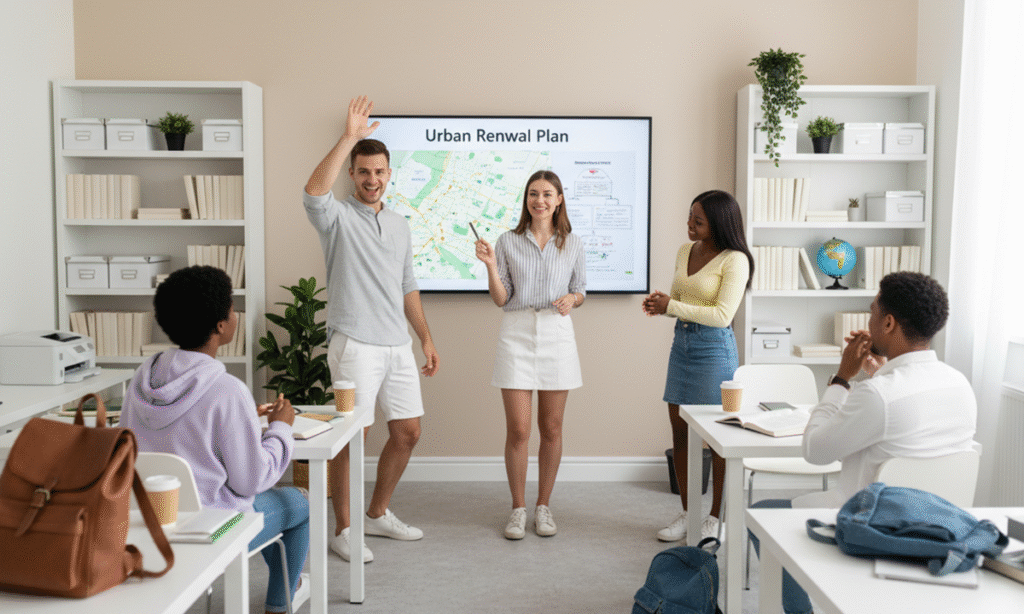
Unlike traditional boards, smart displays support multi-touch and simultaneous interaction — meaning multiple students or participants can write, draw, or manipulate content together at the same time. This supports group work, brainstorming sessions, peer learning, and collective problem-solving — turning lessons into interactive, collaborative experiences rather than one-way lectures.
Flexibility and versatile teaching
Smart displays work equally well across different subjects, contexts, and groups. Whether it’s a school lesson, language class, or cross-cultural seminar — the same display can handle slides, videos, interactive tools, web content, live annotations, and more. Educators or presenters can adapt on the fly: change media type, switch topic, annotate, save notes, or access online resources — giving them freedom to respond dynamically to the group’s needs.
Accessibility, inclusivity, and sustainability
By digitizing content and using integrated displays, smartboards reduce reliance on paper handouts, chalk, or markers — which lowers material waste and helps promote environmentally friendly practices. Moreover, multimedia content combined with annotation tools, zooming, and flexible display options supports learners with different needs— making education or training more inclusive.
Interactive smart displays and all-in-one devices are not just fancy gadgets — they are powerful enablers for modern education. By integrating multimedia, fostering collaboration, enabling flexibility, and supporting diverse learners, they help shift the focus from “preparing slides” to “delivering meaningful learning experiences.” For institutions and organizations looking to modernize their classrooms, adopting smart-display solutions offers a scalable, efficient, and forward-looking path. In a world moving rapidly toward digital and hybrid learning, having a versatile, integrated platform could make all the difference.
For decades, meeting rooms followed a predictable format: a long table, a projector, and a host who managed the discussion while everyone else listened. But…
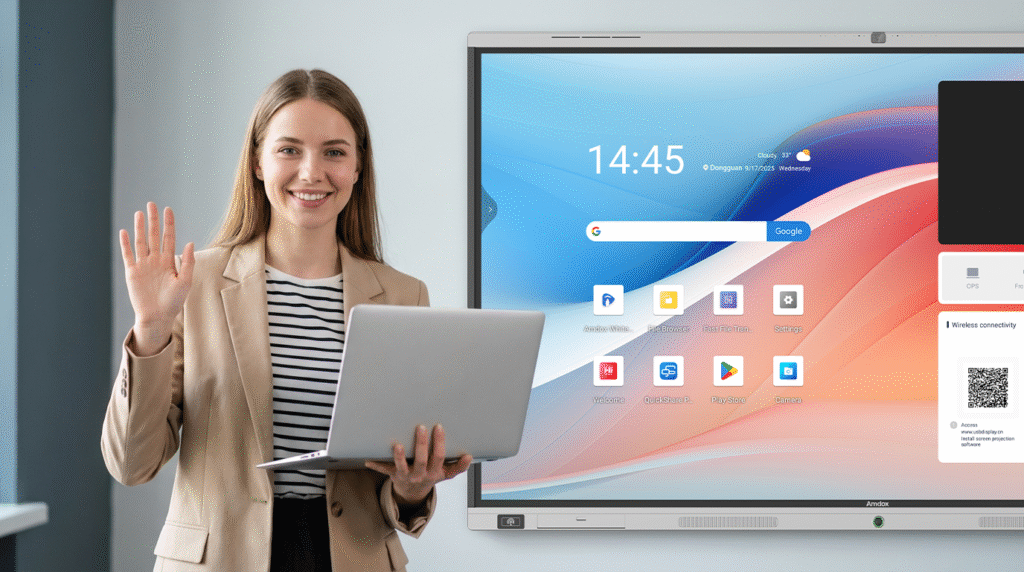
Unified Tools, Seamless Workflow Instead of juggling laptops, cables, speakers, and multiple apps, an all-in-one device integrates everything into one system. Teachers and presenters can…
Digital tools have transformed the classroom from a static, textbook-driven environment into a dynamic, interactive learning space. Smart devices, cloud platforms, and AI-powered tools now…
Amdox Whiteboard V2.0【 Windows Version 】is now live! Here’s what’s new: Multi-Task Management Visual Task View: A new task management window has been introduced, providing…
Amdox Whiteboard V1.6.0 is now live! Here’s what’s new: Supports intelligent distinction between stylus tip, stylus eraser, and finger, allowing the use of different stroke…







 English
  简体中文
简体中文
Great!!
Amdox is the best!