



The Changing Nature of Meetings And Why the Modern Workplace Needs Smarter Spaces


For decades, meeting rooms followed a predictable format: a long table, a projector, and a host who managed the discussion while everyone else listened. But as workstyles evolve, the structure and purpose of meetings are shifting dramatically. Organizations are rethinking how teams gather, communicate, and reach decisions—and meeting spaces are being redesigned to support this cultural change.
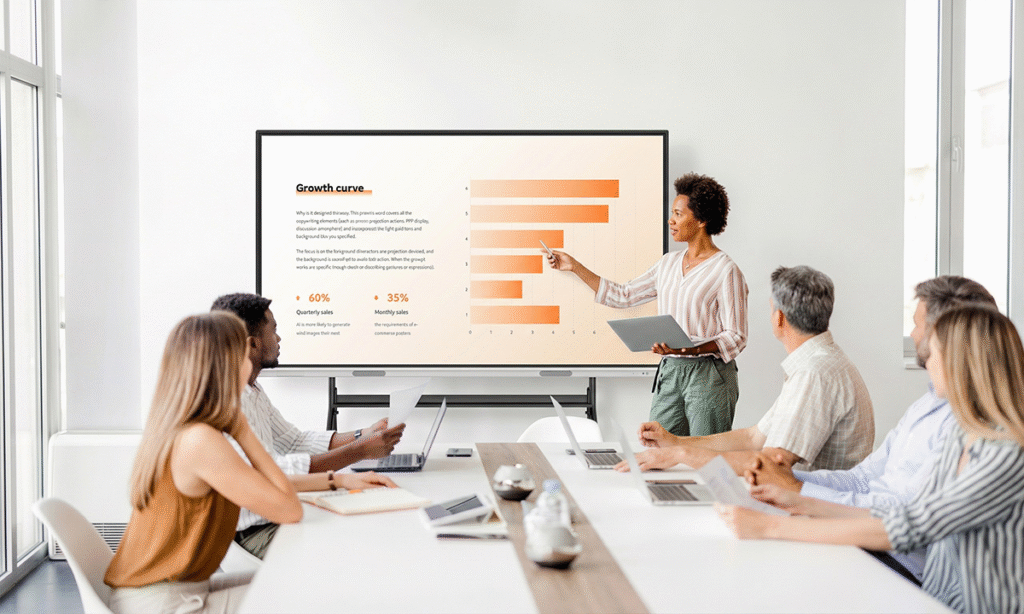
From One-Way Presentations to Collective Participation
In the past, meetings often revolved around a single presenter speaking to a passive audience. Today’s teams expect shared involvement. Brainstorming, co-creation, and rapid exchanges of ideas are now standard practices. This shift requires spaces where information can be shaped together, not just displayed. Modern meeting environments emphasize inclusivity—allowing every participant, in-room or remote, to contribute equally.
Workflows Are Faster, and Meetings Must Keep Up
Decision cycles have accelerated across nearly every industry. Teams can no longer afford slow starts, unclear agendas, or fragmented communication. Meeting processes—planning, sharing materials, documenting ideas, and distributing follow-ups—are becoming more dynamic and continuous. This shift encourages spaces that support instant transitions: from reviewing data to revising plans to capturing new tasks, all within a single session.
Hybrid Work is Reshaping Room Dynamics
With distributed teams now the norm, meetings are no longer purely physical gatherings. Remote members must be fully included—not as spectators but as active collaborators. This requires meeting rooms designed around visibility, sound clarity, and shared content equity. The physical and virtual experience need to feel aligned, reducing the gap between those at the table and those joining from elsewhere.
Physical Spaces Are Becoming Digital Workspaces
Many organizations are reimagining their meeting rooms as digital environments rather than static physical spaces. Instead of relying on scattered tools—laptops, projectors, whiteboards—teams want spaces where information can flow fluidly, be captured naturally, and be shared without friction.
This trend is turning meeting rooms into extensions of the organization’s broader knowledge ecosystem, where ideas created during discussions can be preserved, revisited, and repurposed.
Meetings Are Becoming Shorter, But More Concentrated
As asynchronous communication grows, the role of meetings is changing. Instead of long sessions filled with updates, teams use meetings for what cannot be replicated elsewhere: alignment, creativity, and human connection. This shift emphasizes clarity, focus, and engagement—qualities supported by environments that allow people to interact, visualize concepts, and move quickly from problem to solution.
A Cultural Shift Toward Transparency and Shared Ownership
Organizations are increasingly prioritizing open communication and cross-functional collaboration. Meetings now serve as spaces where information is democratized and decisions are built together. This cultural change calls for environments that support openness—where plans can be visualized, feedback added instantly, and ideas built collectively in real time.

 English
  简体中文
简体中文